What is Maqam?

Play the Arabic way!

The Melodic Maqam System

The roots of melodies in the Middle East and North Africa can be traced back to the Maqam system. We can describe Maqams as modes that usually consist of two connected small melodic units. These melodic units are known as Jins in Arabic, or Ajnas in plural. 

Each Jins has its own specific character, expressing different moods and flavours in compositions and improvisation. They are mostly groups of four (tetrachord) or five notes (pentachord) built on a root (in Arabic: Qarar). The path that the melody travels in the Maqam based composition or improvisation is called the Sayr of the Maqam.

Maqam based melodies can occur in many forms: from very simple just catching the basic flavour of the jins to long solo performances named Taqsim, A taqsim can take more then 5 minutes and  has an extended Sayr containing patterns, sequences and modulations, usually guided with a lot of ornamention, virtuosity and artistic creativity.

The word Maqam literally means place or position, and it refers to where you are on that path while playing. The melodic Maqam system is spread over the whole Arab world, from Morocco to Afghanistan, from Sudan to Turkey.

In Western music theory and practice, we use the term scales for melodic modes, which are usually presented in octaves, groups of eight notes. In comparison, Maqam music theory therefore uses smaller melodic units. The octave can be reached by stacking Ajnas on top of each other. As many of these Jins are diatonic many can be played on Western instruments.

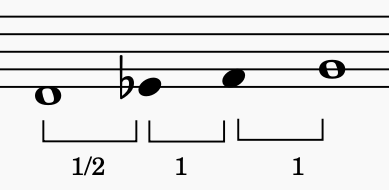
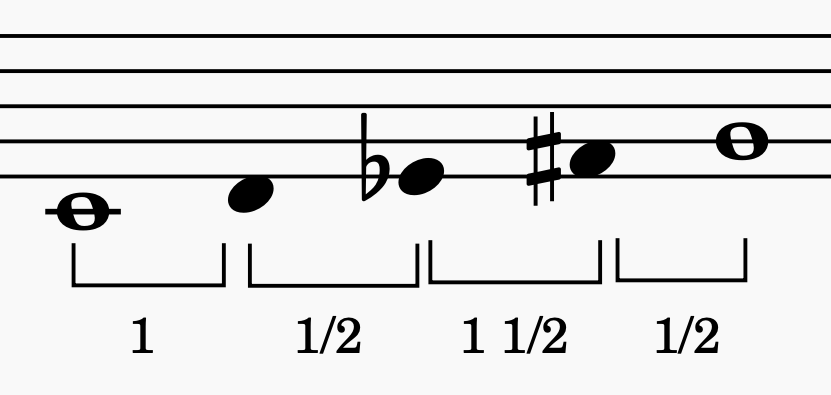
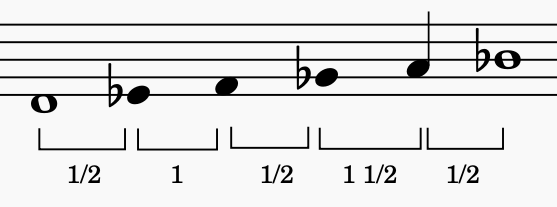
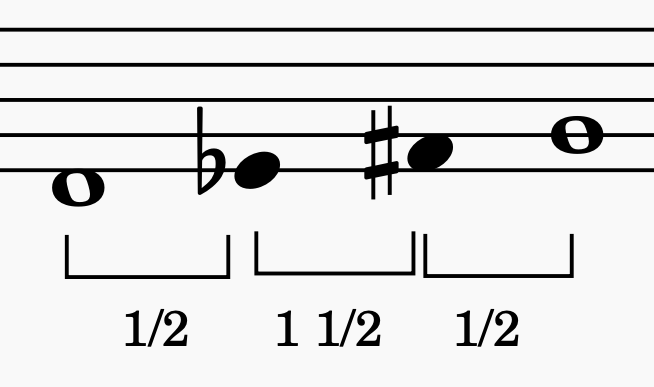
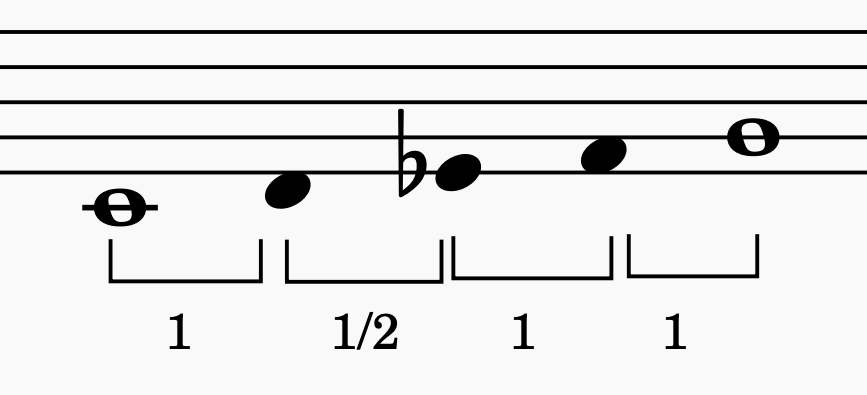
Below I’ve listed common diatonic Jins, all built with half tone (1/2), whole tone (1) and one and a half tone (1+1/2) intervals. As we progress in the book we’re going to play and practice with these units in our songs and improvisations.
The Melodic Maqam System

The roots of melodies in the Middle East and North Africa can be traced back to the Maqam system. We can describe Maqams as modes that usually consist of two connected small melodic units. These melodic units are known as Jins in Arabic, or Ajnas in plural. 

Each Jins has its own specific character, expressing different moods and flavours in compositions and improvisation. They are mostly groups of four (tetrachord) or five notes (pentachord) built on a root (in Arabic: Qarar). The path that the melody travels in the Maqam based composition or improvisation is called the Sayr of the Maqam.

The word Maqam literally means place or position, and it refers to where you are on that path while playing. The melodic Maqam system is spread over the whole Arab world, from Morocco to Afghanistan, from Sudan to Turkey.

In Western music theory and practice, we use the term scales for melodic modes, which are usually presented in octaves, groups of eight notes. In comparison, Maqam music theory therefore uses smaller melodic units. The octave can be reached by stacking Ajnas on top of each other. As many of these Jins are diatonic many can be played on Western instruments.

Below I’ve listed common diatonic Jins, all built with half tone (1/2), whole tone (1) and one and a half tone (1+1/2) intervals. As we progress in the book we’re going to play and practice with these units in our songs and improvisations.
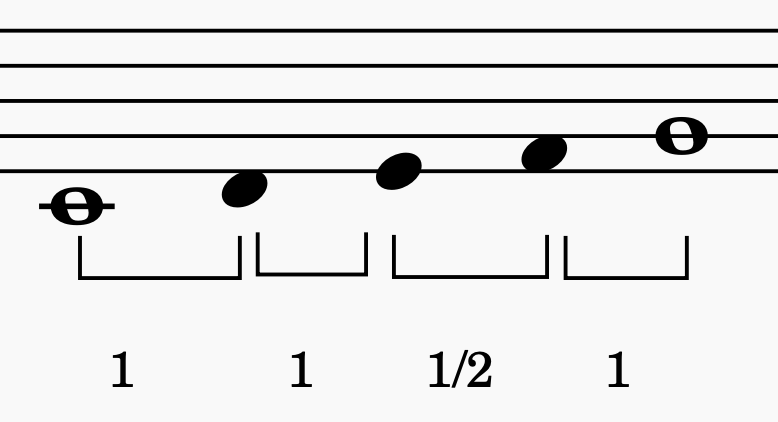
Ajam 5 note Jins

Jins Ajam Sheet Music

Hijaz 4 note Jins

Jins Hijaz

Nahawand 5 note Jins

Jins Nahawand

Kurd 4 note Jins

Jins Kurd

Nikriz 5 note Jins

Jins Nikriz

Saba zam zam

NOTE! These Jins can occur in every key signature or pitch.

Ajam 5 note Jins

Jins Ajam Sheet Music

Hijaz 4 note Jins

Jins Hijaz

Nahawand 5 note Jins

Jins Nahawand

NOTE! These Jins can occur in every key signature or pitch.

Kurd 4 note Jins

Jins Kurd

Nikriz 5 note Jins

Jins Nikriz

Saba zam zam

From the Western music theory perspective, the Ajam Jins can be seen as the lower pentachord of the major scale, which provides an optimistic flavour, while Jins Nahawand as the lower pentachord of the minor scale has a sadder flavour.

The Kurd Jins can be seen as the lower Tetrachord of the Phrygian mode and Hijaz Jins as the lower Tetrachord of the fifth mode of Harmonic minor also known as the Phrygian dominant mode.

As we start to use the more ‘authentic’ Arabic sounding Ajnas, we leave the Western music theory and the well-tempered tuning system behind us. These Ajnas contain 3/4 tone intervals, which don’t occur in Western music.

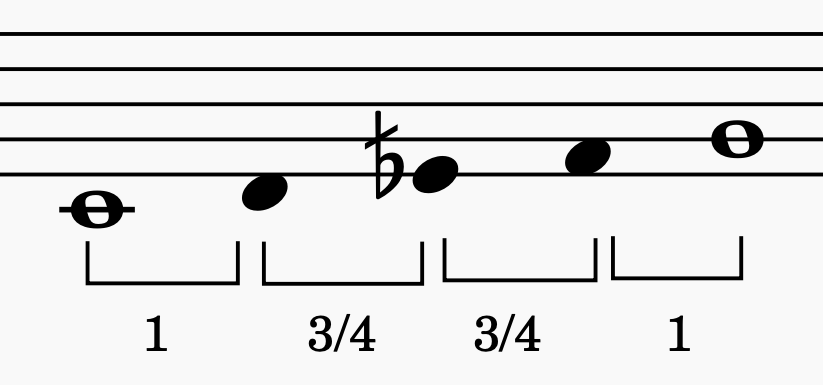
To play these Ajnas we need a Quarter-tone-, microtonal-, or fretless guitar or, in some cases, we can create them by bending the strings. To reiterate, the word Quarter-tone is a little misleading in this context as the 1/4 tone interval itself is not used in Arabic music. Instead, the 3/4 interval is used! Below I’ve listed common micro- tonal Jins used in Maqam music, which can occur in every key signature or pitch.

From the Western music theory perspective, the Ajam Jins can be seen as the lower pentachord of the major scale, which provides an optimistic flavour, while Jins Nahawand as the lower pentachord of the minor scale has a sadder flavour.

The Kurd Jins can be seen as the lower Tetrachord of the Phrygian mode and Hijaz Jins as the lower Tetrachord of the fifth mode of Harmonic minor also known as the Phrygian dominant mode.

As we start to use the more ‘authentic’ Arabic sounding Ajnas, we leave the Western music theory and the well-tempered tuning system behind us. These Ajnas contain 3/4 tone intervals, which don’t occur in Western music.

To play these Ajnas we need a Quarter-tone-, microtonal-, or fretless guitar or, in some cases, we can create them by bending the strings. To reiterate, the word Quarter-tone is a little misleading in this context as the 1/4 tone interval itself is not used in Arabic music. Instead, the 3/4 interval is used! Below I’ve listed common micro- tonal Jins used in Maqam music, which can occur in every key signature or pitch.

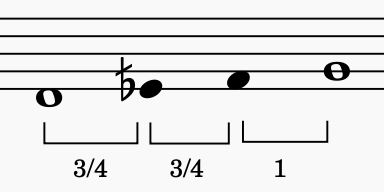
Rast 5 note Jins

Jins Rast

Bayati 4 note Jins

Jins Bayati

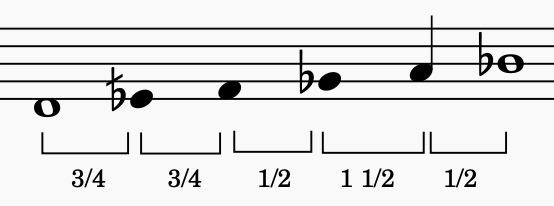
Saba 6 note Jins

Jins Saba

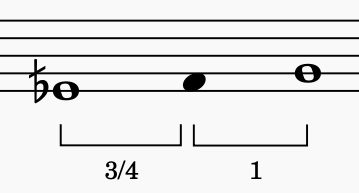
Sikah 3 note Jins

NOTE! These Jins can occur in every key signature or pitch.

Knowledge of these little units (Jins/Ajnas ) helps us to understand and perform Arabic Maqam based melodic music. Best is to practice them on your instrument in all imaginable ways, but also by singing, humming or whistling them. Play them in all keys and all positions on your fretboard, learn them by heart and be aware of the intervals between the notes.

So, basically Maqams are melodic modes built by putting new Jins on top of the other. But it is much more than just a theoretical framework, it represents the DNA of Arabic music with all it’s storytelling, culture, tradition, expression, frasing, skills and emotion included.

As you can imagine, with regard to the diatonic and microtonal Jins mentioned above, this comes with a world of possible combinations. Although we can’t cover that all on this site, it will certainly help get you started.

A good source to learn more about Arabic music and the melodic Maqam system is: https://www.maqamworld.com


Rast 5 note Jins

Jins Rast

Bayati 4 note Jins

Jins Bayati

Saba 6 note Jins

Jins Saba

Sikah 3 note Jins

NOTE! These Jins can occur in every key signature or pitch.

Knowledge of these little units (Jins/Ajnas ) helps us to understand and perform Arabic Maqam based melodic music. Best is to practice them on your instrument in all imaginable ways, but also by singing, humming or whistling them. Play them in all keys and all positions on your fretboard, learn them by heart and be aware of the intervals between the notes.

So, basically Maqams are melodic modes built by putting new Jins on top of the other. As you can imagine, with regard to the diatonic and microtonal Jins mentioned above, this comes with a world of possible combinations. Although we can’t cover them all on this site, it will certainly help get you started.

A good source to learn more about Arabic music and the melodic Maqam system is: https://www.maqamworld.com

© 2026 maqamguitar.com